
Ramp Up ROAS with Demand-Informed Weather Favorability Analytics
While marketers navigate shifts in consumer confidence, inflation, and tariffs, the weather remains the single largest external driver of consumer buying behavior, directly influencing $1 trillion in annual retail sales.
To show brands how to turn weather volatility into measurable return on ad spend (ROAS), Planalytics and WeatherAds hosted a joint webinar: Capture Higher ROAS: Bringing Consumer Purchase Intent into Weather-Based Campaigns.
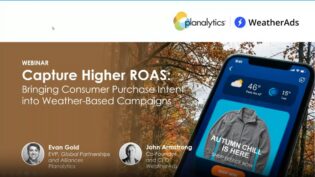
By combining WeatherAds’ automated execution platform across channels like Google, Meta, TikTok, and DV360 with Planalytics’ predictive demand analytics, advertisers take weather targeting to the next level. Instead of relying on precipitation events or mercury readings alone, brands can automatically optimize when and where to target audiences, what products or services to feature, and how to allocate spend based on weather embedded with localized purchasing characteristics, developed from trillions of actual transactions.
The Power of Demand Favorability
Standard weather targeting is a great foundation, but meteorological data doesn’t reflect how consumers actually buy. Temperature or rainfall are environmental measurements; consumer demand is behavioral and varies significantly by product category, geographic market, and time of year.
As Evan Gold, Executive Vice President of Partnerships at Planalytics, explained:
“Planalytics translates weather into a predictive demand signal that you can use to make smarter advertising decisions… What does 90 degrees mean in Phoenix compared to Philadelphia? What does it mean in October compared to August? Planalytics has analyzed trillions of actual sales transactions with the weather to create predictive demand signals… When you hit the customer with a weather-relevant message at the exact same time Mother Nature has them thinking about making that purchase, it creates a synergistic effect where 1 + 1 = 3, or maybe even 5.”
By converting weather into a 5-tier demand favorability index (Very Favorable to Very Unfavorable), marketers gain actionable context tailored specifically to their products.
Automated Execution for Maximum ROAS
Integrating these predictive signals into WeatherAds allows advertisers to set dynamic, automated triggers effortlessly.
John Armstrong, Co-Founder and CEO of WeatherAds, demonstrated the simplicity of setting rules inside the platform:
“The favorability index works on five different levels… When it’s very favorable, you can decide to increase bids or budgets… You can build multi-layered campaigns that increase the budget when it’s particularly favorable, reduce it slightly when it’s neutral, or downgrade your bids when it’s less favorable for sales. You can even run an on-off system that only shows an ad when demand is very favorable.”
Localized Response to Weather
An analysis of September through December 2025 highlights why campaigns driven by broad national or calendar-based assumptions, or activated based on certain weather criteria, may miss opportunities or waste ad spend. For the 18-week period:
- For Fleece, NYC had 11 favorable weeks (“Very Favorable” or “Favorable” signals), but Seattle only had 1.
- For Soup, Denver had 0 favorable weeks while Raleigh had 11.
- For Space Heaters, two northern-tier markets had very different opportunity landscapes: Syracuse had 12 favorable weeks, while Chicago had only 6.
- For Boots, two southern-tier cities showed big differences: Pensacola had 9 favorable weeks, while Dallas had only 1.
The weather is always changing, and Fall 2026 is already producing different windows of opportunity than last year. Weather Favorability Indexes give you the visibility you need to improve targeting and optimize ad spend.
Optimize Your Ad Spend with Predictive Analytics
Relying solely on calendar dates or broad weather metrics leaves significant ad dollars on the table. By pairing automated execution with localized, demand-informed favorability analytics, brands can capture surging demand, avoid wasting budget during market headwinds, and consistently drive higher ROAS.
- Learn more about Planalytics Predictive Demand Analytics and read the official WeatherAds & Planalytics Partnership Announcement.