El Niño Is Coming: What This Can Mean For Your Business
A meaningful climate shift is taking shape that could influence consumer demand through the rest of 2026. Forecasts increasingly point to El Niño developing this summer and strengthening into fall and winter. El Niño is a natural climate pattern characterized by warming of the surface temperatures of the central and eastern tropical Pacific Ocean.
El Niño (and its opposite climatic pattern known as La Niña) often brings volatility to climate and near term weather. Below are the latest thoughts on the current El Niño, along with related business impacts. Planalytics is prepared to support your business, and enable you to proactively meet the corresponding demands of consumers.
Summer
El Niño’s early influence is uneven, leading to inconsistent regional weather patterns. As El Niño develops, businesses can expect:
- Shorter, less predictable demand bursts
- Choppier, more volatile performance in weather-sensitive categories such as summer apparel (swimwear, sandals), consumables (sport drinks, suncare), and cooling products (fans, A/Cs).
- Expect strong weather-driven demand (WDD®) for need-based products when and where extreme heat is present.
Hurricane Season
El Niño tends to suppress Atlantic hurricane activity by increasing wind shear. That said, each tropical season is unique. The 2025 season (last year) was the first time in 10 years with no landfalling hurricanes while 2024 season featured 18 named storms and 5 major hurricanes resulting in the 3rd costliest season on record. Businesses and consumers alike need to have plans in place to account for demand impacts related to tropical storms and hurricanes.
- Lower risk of large-scale disruption across the Southeast and Gulf during peak hurricane season in August, September, and October.
- Fewer emergency-driven demand spikes, although localized risk remains.
- Consumers will act on the forecast of weather, often when they are in under the projected path of a storm. Planalytics WDD® metrics measure the expected and actual impact of extreme weather spending.
- Make sure you are receiving Planalytics Tropical Alerts, which detail the hour-by-hour threats to your specific stores and facilities for each system.
Fall and Winter
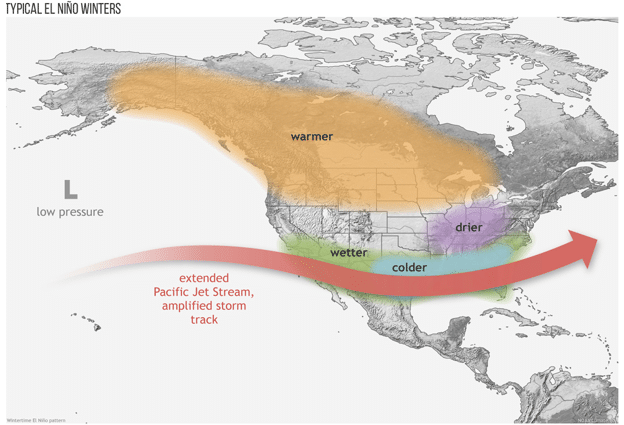
By fall, the jet stream is expected to shift into a more consistent El Niño pattern. The colder months of the year are when El Niño’s effects are most reliable:
- Northern U.S.: typically characterized with milder conditions and less snow. Expect weaker demand for cold weather gear with an increase in store traffic, particularly in restaurants and shopping centers.
- Southern U.S.: often includes conditions which are cooler and wetter than normal. This can drive increases in seasonal demand for apparel (sweaters, gloves, rainwear) as well as consumables (soups, hot drinks).
- Potential favorable shifts in holiday traffic tied to milder northern conditions while those in southern markets may adjust the channels they purchase from if weather limits store traffic during gift-giving season. Planalytics WDD® metrics measure the expected and actual impact of store traffic and holiday spending.
Bottom Line
El Niño tends to shift demand across time and locations rather than drive a clear net gain or loss. That creates both pockets of upside and areas of softness, with the primary risk being volatility across geographic regions and time periods as we move into the back half of the year.
Planalytics will continue to track how this El Niño develops and share updates as needed. In the meantime, if you’d like to discuss this and understand deeper insights on how best to position your business for these projected changes, we’re here to help. Please reach out to your customer success partner or contact us at success@planalytics.com to further discuss specific impacts and insights for your business.